Elderberry vs. Pokeweed: How to Tell Edible Elderberries from Toxic Lookalikes
Two plants. Same fencerow. Same late-summer timing. Both loaded with dark purple berries. One becomes syrup, pie and a winter shelf staple; the other will put you on the bathroom floor for a day. Elderberry and pokeweed grow within a few yards of each other across much of North America, and every August someone mixes them up. The good news: they separate cleanly once you know four things to check — the stem, the leaves, the flower shape, and how the berries hang.
Start With the Stem: Woody Shrub or Fleshy Giant?
Before you look at a single berry, look at the plant's architecture.
Elderberry (Sambucus canadensis in North America, Sambucus nigra in Europe) is a woody shrub. It sends up perennial canes and reaches six to twelve feet. Older canes have grayish bark dotted with small warty bumps, and snapping one open reveals a soft white spongy pith. It stands through winter, even bare.
Pokeweed (Phytolacca americana) is herbaceous. It dies back to a thick root every autumn and pushes up new stalks in spring — smooth, fleshy, often pink or magenta, and capable of eight feet in a single season. Cut one and you'll see solid white flesh, no woody ring. If the patch vanishes in winter, it was pokeweed.
Leaves Settle It Fast
This is the most reliable field mark, and it takes about three seconds.
- Elderberry: leaves grow in opposite pairs, two meeting at the same point on the stem. Each leaf is pinnately compound — five to seven (sometimes nine) lance-shaped leaflets along a central stalk, with finely serrated edges.
- Pokeweed: leaves grow alternately, one per node, climbing the stem in a spiral. They're simple, not divided, six to twelve inches long, oval with a pointed tip and smooth, unbroken edges.
Run your eyes up the stalk. Paired leaves mean it isn't pokeweed. Leaves climbing one at a time mean it isn't elderberry.
Flowers and Berry Clusters: Shape Is Everything
Elderberry blooms in late spring with flat-topped or slightly domed clusters of tiny, creamy white, sweet-smelling flowers. Those clusters become the fruit: hundreds of berries the size of peppercorns, ripening green to red to deep purple-black, held in a flat head on reddish stems that droop as they get heavy.
Pokeweed flowers in elongated spikes called racemes — small white blossoms with greenish centers on pinkish stalks. The berries that follow are noticeably bigger, roughly a centimeter across, glossy, and arranged in long, tapering clusters hanging downward like a skinny bunch of grapes. Each berry has a small dimple and holds flat seeds. Squeeze one and the juice stains your fingers fast.
The shortcut: a flat or domed head of tiny berries means elderberry; a long, tapered, drooping spike of larger berries means pokeweed.
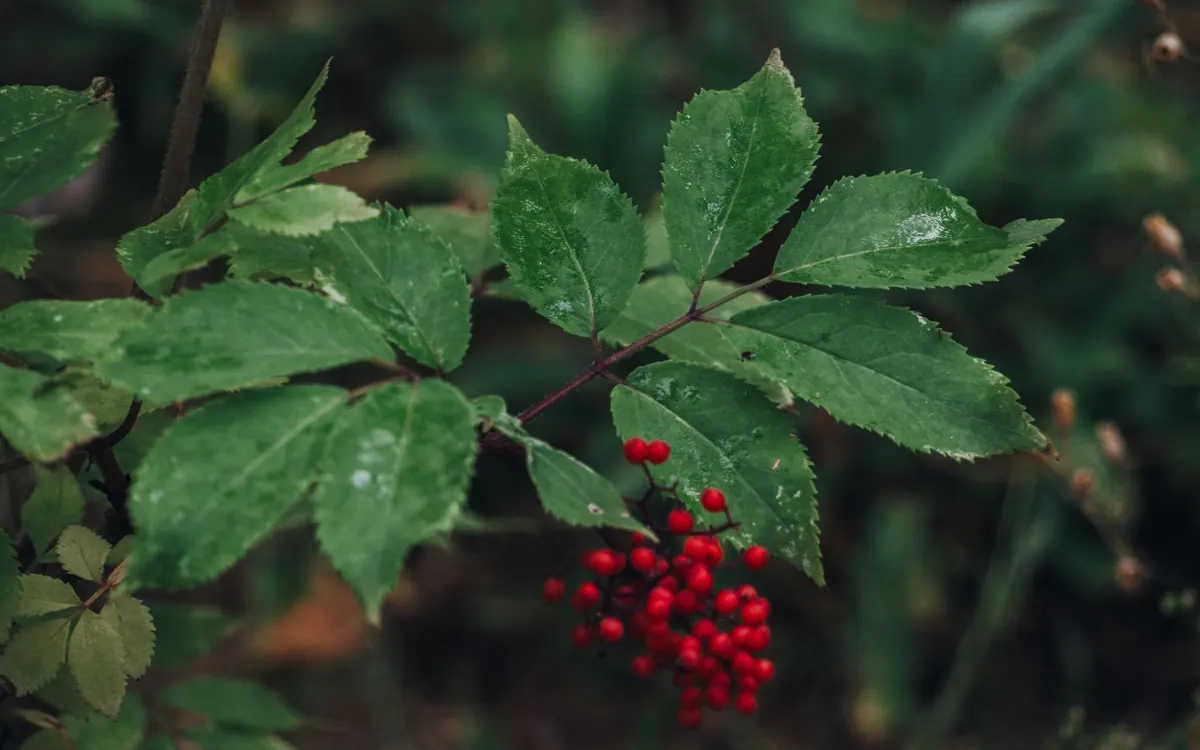
Two relatives deserve caution. Red elderberry (Sambucus racemosa) carries bright red berries in cone-shaped clusters and is more toxic than the black kind. Dwarf elder (Sambucus ebulus) grows low and herbaceous. Stick to purple-black berries in flat clusters.
What's Poisonous in Each Plant
With elderberry, the fruit is the only part worth eating — and only after cooking. The leaves, stems, bark, roots and unripe green berries contain cyanogenic glycosides that can cause nausea, vomiting and diarrhea, and ripe berries eaten raw can do the same. Thorough cooking destroys those compounds; freezing and drying do not.
With pokeweed, everything is toxic, at every stage, in every season. The root is most dangerous, followed by stems and leaves, and the berries are not safe to eat either. Eating any part can cause severe stomach upset and diarrhea, and serious cases need medical care. The traditional spring dish "poke sallet" relies on repeated boiling and discarding the water from very young shoots; it remains a gamble plenty of people lose. Birds eat pokeweed berries without trouble. You are not a bird.
If a person or pet has eaten any part of a pokeweed plant, contact a poison control center or seek medical care right away. Don't wait for symptoms to start.
Processing Elderberries Safely
- Pick only fully ripe fruit. Late August through September in most of North America. A cluster holds green, red and black berries at once — take the black ones and leave the rest for another day.
- Cut whole clusters with pruners into a bucket. Don't pile them deep or they'll crush and ferment.
- Strip the berries from the stems with a fork, working over a bowl. Discard every stem, leaf and green berry. This step matters most.
- Rinse briefly in cool water and drain. Don't soak them.
- Cook them properly. Simmer in a little water for 20 to 30 minutes before using them in syrup, jam or pie filling, and keep the mixture at a full simmer. Strain out seeds and pulp for juice.
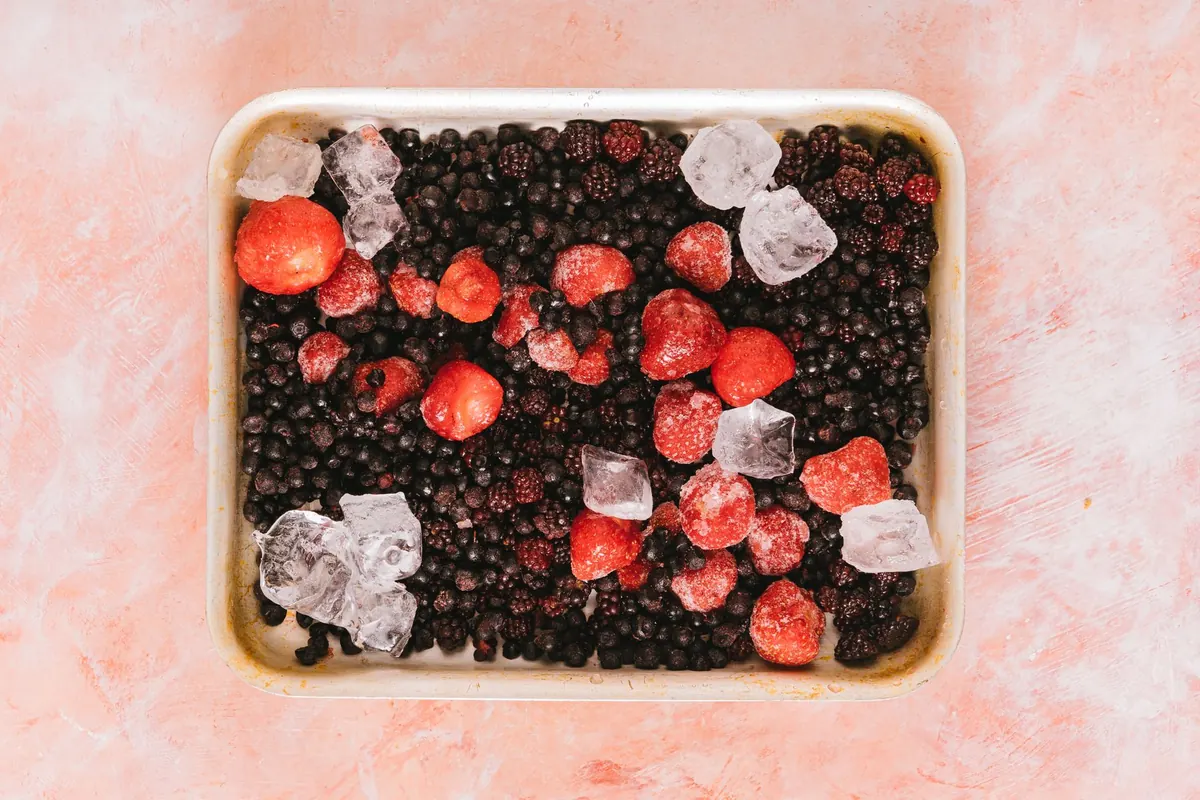
- Store the rest. Freeze whole berries on a tray, then bag them for later cooking. Finished syrup keeps in the refrigerator or freezer.
Wear an old shirt; elderberry juice stains permanently. A stray green berry won't ruin a batch, but a handful will taste bitter and can leave you queasy, so sort carefully.
If You're Not Certain, Walk Away
Two rules cover almost every mistake. Opposite leaves on a woody shrub with flat clusters of tiny berries: elderberry, safe to take home and cook. Alternate leaves on a fleshy, reddish, non-woody stalk with long drooping spikes of bigger berries: pokeweed, and it belongs in the compost.
When a plant doesn't match cleanly — odd leaf arrangement, red berries, a soft stem on something that otherwise looks right — leave it and check again next week. Photograph the leaves, flowers and fruit, note the date, and compare against a reliable regional guide or your local extension service before harvesting a single berry. There's no shortage of elderberries, and no prize for guessing.
Photo: Lisá Yakurím / Pexels
Drying Wild Mushrooms at Home: Dehydrator, Oven, and Air-Drying Methods
A practical guide to drying wild mushrooms in a dehydrator, oven, or open air, with prep steps, dryness...
Beginner's Guide to Identifying Wild Raspberries, Blackberries, and Dewberries
Learn to tell wild raspberries, blackberries, and dewberries apart by fruit core, cane habit, leaves,...
About Us