How to Harvest Stinging Nettles Safely: Gloves, Timing, and Cooking
Stinging nettles are the first real reward of the foraging year. They push up through cold soil weeks before anything else is worth carrying home, and they taste like spinach with a mineral backbone — green, savoury, faintly of the sea. The catch is right there in the name: brush a bare forearm against a patch and you will know within seconds. But the sting is a handling problem, not a reason to stay indoors. Learn to read the plant, cover your skin, and cook what you gather, and nettles turn from nuisance into one of the most useful wild greens you can find.
Identify Stinging Nettle Before You Touch It
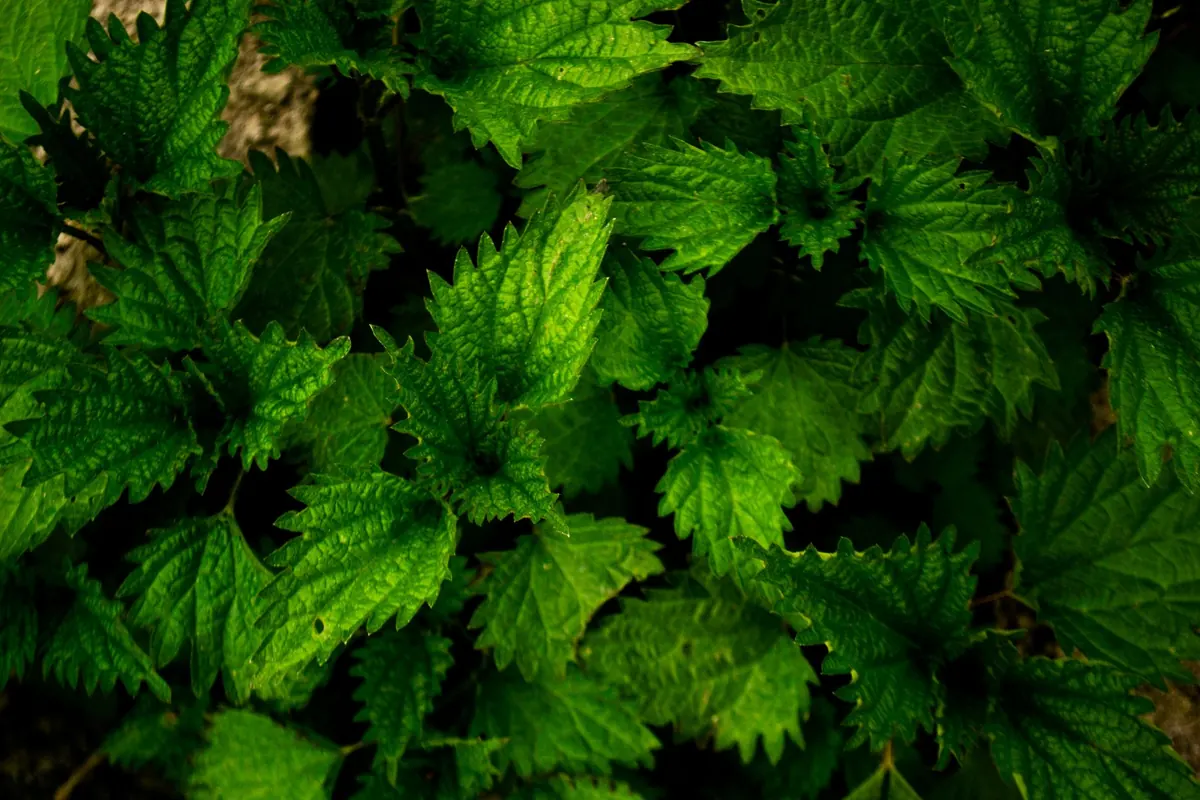
Stinging nettle (Urtica dioica) is a tall, upright perennial that grows in dense stands, usually somewhere nitrogen-rich: riverbanks, hedgerows, field edges, old farmyards, compost heaps, the shaded side of a shed. Plants run from knee height in early spring to chest height by midsummer, and the stems often take on a reddish flush near the base.
The details that matter:
- Leaves in opposite pairs. They meet the stem at the same point, one on each side. This is the single best check against lookalikes.
- Coarsely toothed edges and a heart-shaped base tapering to a pointed tip, with deep, prominent veins.
- A rough, matte surface — dull dark green, never glossy, slightly quilted between the veins.
- A square-ish, ridged stem that snaps rather than bends cleanly.
- Fine bristles visible on the stem, leaf edges and undersides, especially when you tilt the plant against the light.
Two plants get confused with it. Dead-nettles (Lamium) look similar from a distance but carry no sting and bear white, yellow or purple flowers. Wood nettle (Laportea canadensis) in North America stings harder still and has alternate leaves rather than opposite ones. Check leaf arrangement every time, and if you are not certain, walk away. There is always another patch.
Time Your Harvest
Spring is the season. From the moment shoots appear to just before flowering, nettle tops are tender, sweet and easy to work with. Once plants throw out those small greenish tassels in the leaf joints — usually late spring into summer — the leaves toughen and develop a gritty texture. Most foragers leave those plants alone and wait for regrowth instead.
That regrowth is the quiet trick of nettle picking. Any patch that gets cut back, mowed or trampled will push fresh tender tips within a few weeks, which means you can often harvest good nettles well into autumn. Go for tips roughly 10–15cm long. Pick in the cool of the morning rather than the heat of the afternoon, when plants are limp and wilt fastest. And carry them home the same day — nettles lose their snap quickly, even in a cool bag.
One thing worth checking before you set out: land access. In many places you need the landowner's permission, and some sites have local protection rules. Know whose ground you are on.
Gear That Actually Protects You
- Thick gloves. Leather, rigger gloves or coated gardening gloves. Thin nitrile or latex exam gloves are not enough — the hairs are fine and stiff enough to poke straight through.
- Long sleeves and trousers, plus closed shoes. Nettle hairs can work through thin cotton with enough contact.
- Scissors or snips. Cleaner than pinching, and they keep your fingers out of the plant.
- A wide basket or paper bag you can carry away from your body. Crushed nettles in a tight bag release more irritant, and the weight presses the bristles against the sides.
- Tongs for moving freshly cut nettles later in the kitchen.
How to Pick Without Getting Stung
- Approach the patch slowly. Nettles hide behind grasses and cow parsley, and the sting you don't see is the one you get.
- Take the top three or four pairs of leaves with the growing tip. That is the prime cut — tender, clean, quick to cook.
- Hold the stem with your gloved hand and snip below your grip. Let the piece drop into the basket rather than pushing it down.
- Leave the lower stem and roots. The plant regrows, and the patch stays productive for years.
- Stay at the edge of the stand. Reaching deep into a thicket is how people end up with nettles down a sleeve.
- Don't overfill. A loose basket of tips is easier to handle and bruises far less.
- Wash and blanch as soon as you get home, before the leaves wilt.
If You Do Get Stung
It happens to everyone, usually through a sleeve gap or a glove cuff. Rinse the area with cool water and mild soap, then apply something cold. Pressing sticky tape over the skin and peeling it off can lift some of the fine hairs out. Traditional poultices of crushed dock leaf, plantain or jewelweed are widely used and bring relief to plenty of people, though the evidence behind them is thin — if it helps, it helps.
The sting usually settles within an hour, though a faint tingle can linger longer. Watch for anything more than that. If the reaction spreads well beyond the contact area, or you feel unwell, dizzy or short of breath, treat it as a medical emergency and get help. Anyone with a known plant allergy should be cautious around nettles in the first place, and it is always sensible to check with a health professional if you are pregnant, taking medication or managing a health condition before making wild greens a regular part of your diet.
Blanching and Cooking: Where the Sting Ends
Blanch first, always
Heat destroys the sting, so a fast blanch is the whole trick. Bring a large pot of water to a rolling boil. Tip the nettles in with tongs — they will hiss and collapse. Leave them for 60 to 90 seconds, stirring once, until the leaves turn a deep, bright green. Drain, then plunge into cold water to stop the cooking, and squeeze out the excess moisture once they are cool enough to handle. You now have a plain cooked green that behaves exactly like spinach.
Don't skip this step and eat raw nettles straight from the basket. Blending raw nettles very hard will break the hairs down, but blitzing them half-heartedly is a gamble with your mouth. Boiling water costs you a minute and removes all doubt.
The cooking water turns dark green and tastes faintly bitter and vegetal. Some people keep it as a broth base or pour it on the garden; others tip it away. If you want to drink it, taste a small amount first.
What to do with them
Treat blanched nettles like spinach and you will use them constantly. Simmer with potato, leek and stock for a classic nettle soup, finished with a grating of nutmeg. Whizz with garlic, toasted seeds, hard cheese and olive oil for a pesto that holds its colour beautifully. Fold chopped nettles into omelettes, frittatas and potato cakes, or layer them into filo with feta in place of spinach. Drying works too: hang small bundles in a warm, dark, airy spot, then crumble the leaves into a jar for tea. Drying also removes the sting.
Expect shrinkage. A carrier bag of fresh tips cooks down to a couple of fistfuls, so pick generously if you plan to freeze portions.
Where Not to Pick, and What to Do Next
Skip roadside verges thick with exhaust and spray drift, the edges of sprayed farmland, industrial ground, and any patch that doubles as a dog-walking route. Choose clean ground well away from traffic, and wash your harvest thoroughly in a colander before blanching.
Start with a small batch. Pick a basket of tips, blanch them the same afternoon, and taste them plainly before you commit to a recipe — that is how you learn the flavour of your own local patch. Freeze the rest in small portions covered by their own liquid, and you will have a taste of early spring in the middle of January.
Photo: YumeSofii / Pexels
Drying Wild Mushrooms at Home: Dehydrator, Oven, and Air-Drying Methods
A practical guide to drying wild mushrooms in a dehydrator, oven, or open air, with prep steps, dryness...
Beginner's Guide to Identifying Wild Raspberries, Blackberries, and Dewberries
Learn to tell wild raspberries, blackberries, and dewberries apart by fruit core, cane habit, leaves,...
About Us