From Penny Slots to High Stakes: Inside the Mind of a Modern Gambler
There is a specific kind of silence that falls over a poker room at 3 a.m. It is not quiet, exactly. It is the sound of chips clicking, cards whispering across felt, and a dozen people holding their breath at once. That moment — where luck, mathematics, and nerve collide — is what makes iGaming so endlessly fascinating. Whether you are spinning a 20-cent slot on your phone during a commute or grinding a six-hour tournament on a laptop, the core experience is the same: you are paying for a shot at something uncertain.
But here is what separates a frustrated gambler from a smart one. The smart player understands the machinery behind the screen. They know why some bets are better than others, why a casino edge is not a personal insult, and why the house always wins in the long run — and they play anyway, on their own terms. This article is not a get-rich-quick guide. It is a look under the hood.
The Real Odds: Why Slot Volatility Matters More Than RTP
Most players check the RTP (Return to Player) percentage and call it a day. A 96% RTP slot sounds better than a 94% one, right? Technically, yes — over millions of spins. But in your actual session, volatility plays a much bigger role in what you feel.
Two slots can both have a 96% RTP. One is low volatility: you get frequent small wins, your bankroll drifts slowly downward, and you rarely see a massive hit. The other is high volatility: long dry spells followed by a screenshot-worthy payout that can be 5,000x your stake. Same RTP, completely different experience.
- Low volatility slots are like a slow leak in a tire — steady, predictable, good for long sessions with a small budget.
- High volatility slots are like buying a lottery ticket with better math — brutal streaks, but the dream is real.
- Medium volatility is where most modern Megaways-style games live, offering a mix of both.
If you have a $50 bankroll and want to play for two hours, a high-volatility slot with a $1 spin will likely eat you alive before you see a bonus round. A low-volatility game at $0.20 per spin might keep you entertained all evening. Match the game to your bankroll, not the other way around.
Poker vs. Casino Games: Where Skill Actually Changes the Math
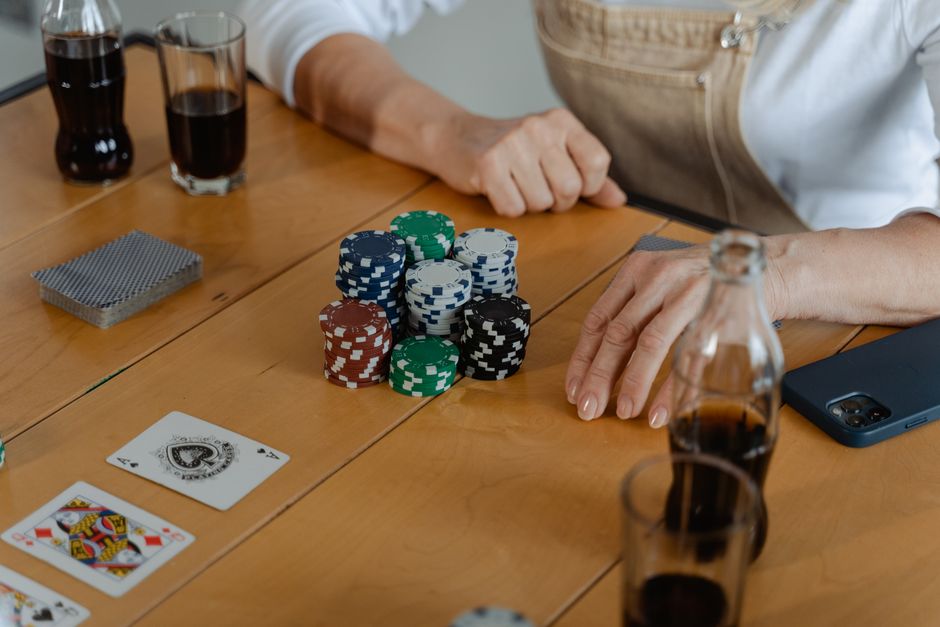
Here is a hard truth that casino lobbies do not advertise: most casino games are pure luck with a fixed house edge. Slots, roulette, baccarat, craps — your decisions barely move the needle, and the house edge is baked in. Poker is different. Poker is not you versus the casino; it is you versus other players, with the house taking a small rake from each pot.
That means a skilled poker player can achieve a positive expected value over time. A skilled slot player cannot. This is not semantics — it is the fundamental divide in iGaming.
- Casino games — house edge ranges from 0.5% (blackjack with perfect basic strategy) to 5% or more (American roulette at 5.26%). You cannot eliminate it.
- Poker — the rake is typically 5% of the pot, capped. If you are better than your opponents, you profit. If you are worse, you lose. The house does not care who wins.
- Sports betting — the vig (juice) is usually around 4-5% on a standard two-way line, but sharp bettors who line-shop can reduce that significantly.
This is why you see poker pros with decade-long careers and almost no professional slot players. The math simply does not allow it.
The Bonus Trap: Why Wagering Requirements Are a Math Problem
Welcome bonuses look generous. “100% up to $500!” sounds like free money. Then you read the fine print: 40x wagering requirement, bonus only, slots contribute 100% but table games contribute 10%, maximum bet $5, and a 7-day expiry.
Let us do the math. You deposit $100 and get a $100 bonus. You need to wager $4,000 (40 x $100) before withdrawing. If you play a slot with a 4% house edge, your expected loss on that wagering is $160. You started with $200 total. So even if you complete the requirement, your expected remaining balance is $40. The bonus is not free — it is a discount on entertainment, not a gift.
That does not mean all bonuses are worthless. A 10x wagering requirement with a 97% RTP game? That is genuinely valuable. The key is to calculate the expected cost before you claim anything. Plenty of people rely on slot 5000 for this kind of information.
A quick rule of thumb
Multiply the wagering requirement by the house edge of the game you plan to play. If the result is higher than the bonus amount, the bonus is a net negative. Example: 30x wagering on a 96% RTP slot (4% edge) means 30 x 0.04 = 1.2, or 120% of the bonus value lost in expected terms. Walk away.
Bankroll Management Is the Only Edge You Control
You cannot control the cards, the dice, or the reels. You can control how much you risk. This is not about being timid — it is about survival.
- The 5% rule — never risk more than 5% of your total bankroll on a single bet or tournament buy-in. If you have $200, your max buy-in is $10. This keeps variance from wiping you out.
- Session stop-loss — decide in advance that if you lose 30% of your session bankroll, you stop. No exceptions.
- Win cap — the hardest discipline: if you double your session bankroll, cash out half and play with the rest. You will never regret locking in a profit.
I have seen talented poker players go broke not because they played badly, but because they played too big for their roll. A 2% edge means nothing if a single bad night ends your ability to keep playing.
The Psychological Hook: Why You Keep Spinning
Slot designers are not just artists — they are behavioral engineers. Near-misses (two symbols out of three) activate the same dopamine pathways as actual wins. Variable ratio reinforcement — the same principle that makes social media addictive — is the core of slot math. You never know which spin will hit, so you keep going.
Understanding this does not make you immune. But it does help you recognize the moment when you have crossed from entertainment into compulsion. If you are chasing losses, hiding your play from family, or betting money you need for rent, the game has stopped being a game.
Set time limits. Use deposit limits. Take breaks. The casino does not need your rent money, and the poker table will still be there tomorrow.
The Bottom Line
iGaming is a spectrum. On one end, slots are pure entertainment with a fixed cost over time. On the other end, poker is a competitive skill game where the best players actually win. Most of us live somewhere in the middle — a bit of fun, a bit of hope, a bit of math.
The players who enjoy it most are the ones who understand the difference. They know a 40x wagering bonus is rarely a gift. They know a high-volatility slot can be a blast with a small stake and a big dream. They know the house edge is real, and they play anyway because the experience is worth the price of admission. That is not gambling ignorance — that is gambling intelligence. And it is the only kind that lasts.
The Real Differences Between Slots, Poker, and Sports Betting
Most people who walk into an online casino for the first time assume the games are interchangeable. Same...

The Real Difference Between Luck and Skill in iGaming
Ask ten gamblers what separates a winning session from a losing one and you'll get ten different answers....
About Us